
AI in agriculture is changing the way modern farming works. What if farmers could identify crop diseases, pest attacks, or soil stress before visible damage even appears in the field? With artificial intelligence and real-time monitoring, that is now possible.
Crop damage often becomes expensive not because problems cannot be identified, but because they are detected too late. AI is helping farming organizations identify threats earlier, respond faster, and make more accurate decisions before losses grow at scale.
According to the World Bank- Food Security and Agriculture, food production must increase by nearly 70% by 2050 to meet growing global demand, making smarter and more efficient farming technologies increasingly important. To support this shift, Hiteshi Infotech builds AI-powered agricultural systems that combine predictive analytics, satellite monitoring, and intelligent automation to improve crop management.
How AI Is Transforming Modern Agriculture
Traditional farming methods depend on manual inspections. A field officer walks the land, spots a problem, reports it and by the time a decision is made, the damage has already spread.
AI-powered agriculture solutions help businesses move from delayed response to early action. Modern AI systems can:
- Monitor crop health continuously across large regions
- Detect pests and diseases before they spread
- Analyze weather and vegetation patterns for early warnings
- Improve irrigation and resource planning
- Forecast risks using historical crop and weather data
The shift is simply fewer better visibility, lower losses, better yields.
Challenges Faced by Traditional Farming
Many farming operations still struggle with disconnected data, slow reporting, and manual processes that simply cannot scale. Here is what that costs in practice:
Agricultural Challenge | Business Impact |
Manual crop inspections | Slow detection and higher crop loss |
Delayed pest identification | Problems spread before action is taken |
Scattered farm data | No centralized visibility for planning |
High field workload | Increased pressure on operational teams |
AI-Powered Agricultural Intelligence Solution
To solve above challenges, a custom agriculture platform is designed around how modern farming operations actually work from field-level monitoring to regional decision-making.
Smarter Crop Monitoring
The platform continuously monitors crop conditions using satellite data. Agricultural teams get real-time alerts the moment a problem is detected whether it is early pest activity, crop stress, or changing vegetation patterns.
Early Threat Detection
AI models analyse images from satellites, and mobile devices to catch issues that the human eye cannot spot. Pest outbreaks, fungal diseases, and soil stress are identified days before they become visible.
Predictive Risk Forecasting
By studying historical crop data, weather conditions, and field behavior, the system can forecast possible pest outbreaks and farming risks in advance.
One Connected Platform
Weather data, field reports, imaging systems, and monitoring tools all feed into a single dashboard. Agricultural managers get a complete, real-time view of operations.
Field Teams Stay Connected
Field workers can instantly capture and report crop issues from their phones. Updates reach the central system in real time, reducing the gap between what is happening on the ground and the decisions being made in the office.
What This Means for Your Business
For farmers and agricultural decision-makers, the value is straightforward:
- Early threat detection means less crop damage and lower emergency spending
- Automated reporting reduces workload and human error across large operations
- Predictive planning supports better procurement, storage, and logistics decisions
- Centralized data gives leadership a real-time operational view
For large agricultural operations, even a small reduction in crop loss can translate into significant annual savings and stronger yield predictability.
What Smarter Farming Actually Delivers
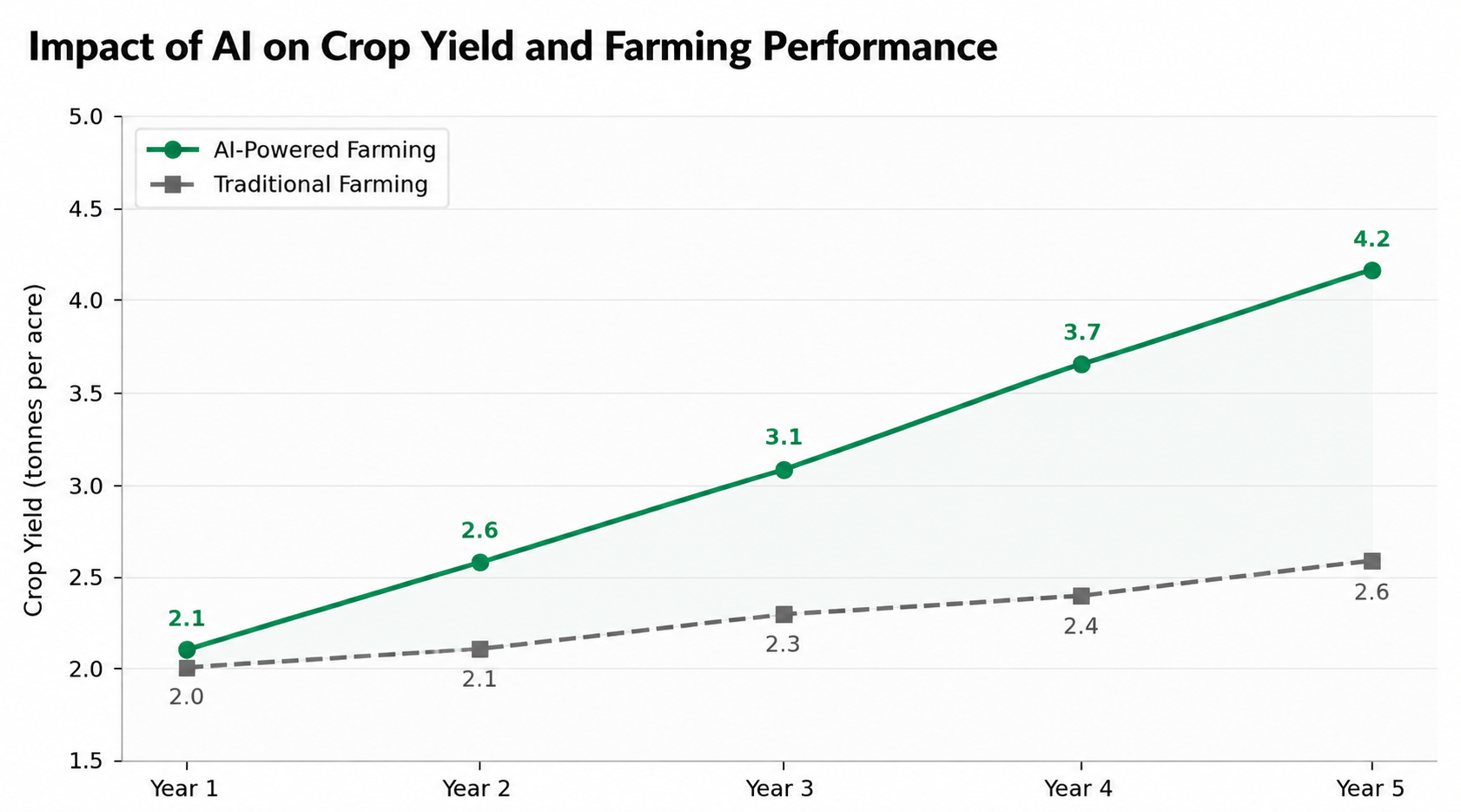
FAO reports that farms using AI-driven monitoring and predictive systems can reduce crop losses by up to 40% while improving yield consistency through faster and more accurate decision-making.
Benefits of AI in Agriculture
AI in agriculture is not just about technology it is about running a better, more profitable farming operation.
- Better crop protection through early threat detection
- Reduced crop losses season after season
- Smarter use of water, fertilizer, and field resources
- Less manual workload for field and management teams
- Stronger yield consistency year after year
By combining intelligent monitoring with real-time insights, agricultural businesses can improve operational efficiency while reducing long-term farming risks.
The Future of Smart Farming
AI in agriculture is not a trend, it is quickly becoming standard for competitive farming operations globally. Machine learning, remote sensing, and connected monitoring systems are already reshaping how large-scale agriculture is managed.
The farms and agribusinesses that adopt these technologies early will operate with better yields, lower losses, and more confident decision-making compared to businesses still relying heavily on manual processes.
As demand for sustainable and efficient food production continues to grow, AI in agriculture will play a defining role in how the world feeds itself in the decades ahead.
Conclusion
AI is reshaping agriculture by making farming more proactive, efficient, and data-driven. From real-time crop monitoring to predictive pest detection, intelligent systems are helping agricultural organizations improve productivity while reducing operational risks.
AI-powered agricultural solutions by Hiteshi Infotech show how intelligent farming systems can improve crop monitoring, reduce operational risks, and support smarter agricultural management.
Source: FAO and World Bank – Food Security and Agriculture
FAQs
How can AI in agriculture improve crop yield and farming efficiency?
AI in agriculture helps farmers spot problems early, improve decision-making, and manage farming activities more efficiently using intelligent systems and real-time insights.
Why are agribusinesses investing in AI agriculture solutions?
Agribusinesses are investing in AI agriculture solutions to automate farming tasks, improve operational efficiency, and get better visibility into daily farming activities. These smart systems also help teams react faster to field-level issues.
What is predictive analytics in farming?
Predictive analytics uses weather data, farming patterns, and past records to predict possible risks like pest attacks and crop diseases. This helps farmers take action earlier.
How can custom software development improve agriculture operations?
Custom software development helps agricultural businesses build smart farming platforms that support automation, real-time updates, and easier farm management. These systems help teams track farming activities and make better decisions more quickly.
How does automation improve farming operations?
Automation helps reduce manual work, speed up reporting, and improve overall farming efficiency. It also helps farmers and agricultural teams manage large farming operations more smoothly using intelligent systems.