
How AI in Logistics Improves Route Optimization and Delivery Efficiency
Traditional logistics systems often struggle with rising fuel costs, unpredictable traffic conditions, and inefficient route planning. This is where AI in logistics is changing the way modern supply chains operate.
Artificial intelligence enables logistics companies to analyze large volumes of operational data in real time and make smarter routing decisions automatically. From route optimization to predictive delivery management, AI-driven logistics solutions help businesses improve efficiency while reducing transportation costs.
According to McKinsey, companies implementing AI-enabled supply chain management have improved logistics costs by up to 15%.
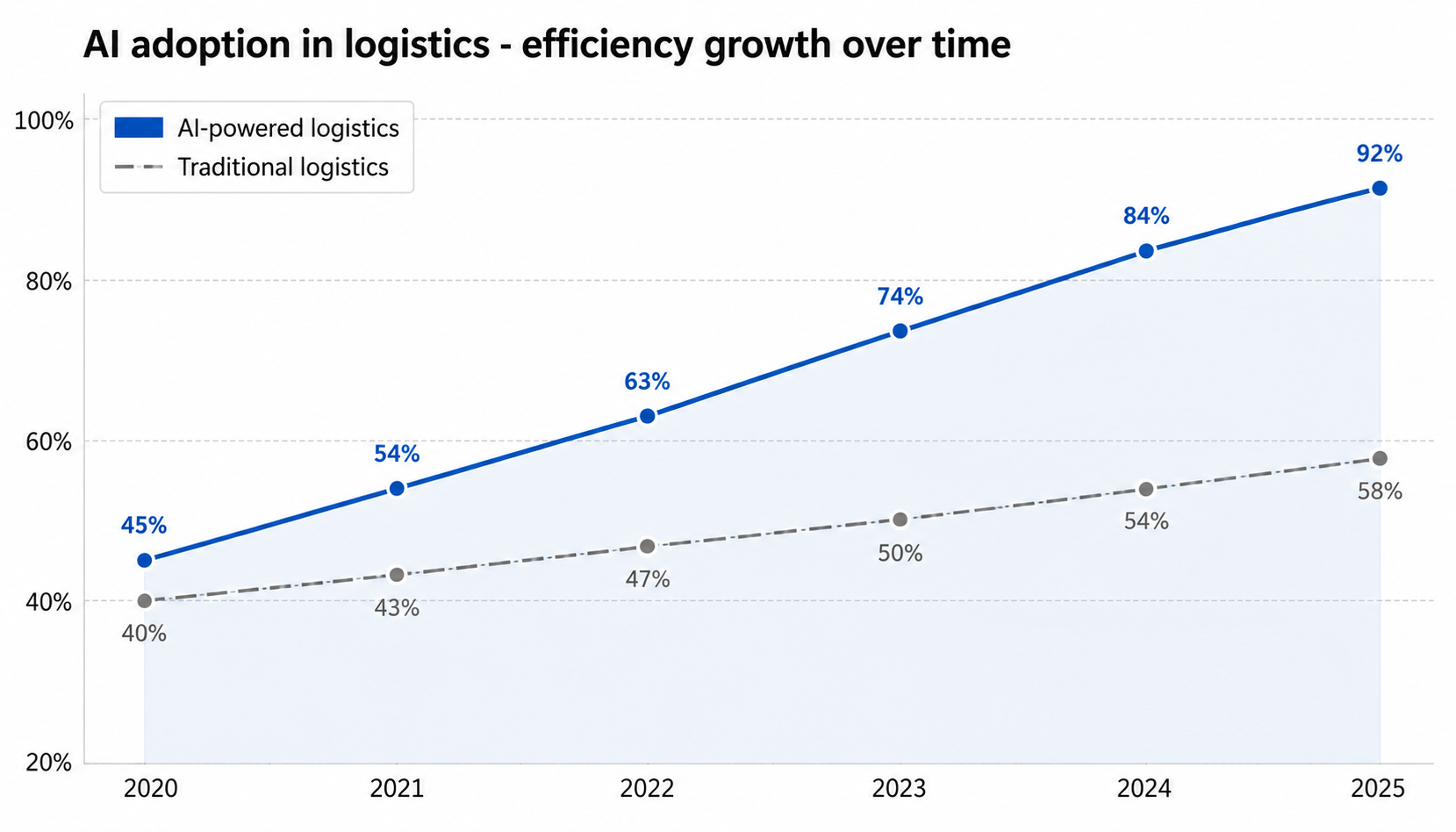
For businesses, AI is no longer just a technology trend. It is becoming a practical business strategy for improving delivery performance, reducing operational inefficiencies, and building scalable logistics operations.
Why Traditional Logistics Systems Fail Modern Delivery Demands
Many logistics operations still rely on static route management systems. While these methods may work at a smaller scale, they become inefficient as delivery volumes and operational complexity increase.
Traditional route planning often cannot respond quickly to traffic congestion, last-minute order changes, vehicle breakdowns, weather disruptions, delivery priority updates, and driver availability changes.
As a result, businesses experience higher transportation costs, delayed deliveries, inefficient fleet utilization, and reduced customer satisfaction. For companies managing growing delivery networks, even small inefficiencies can create significant operational losses over time.
This is why enterprises are increasingly investing in AI-driven logistics optimization platforms.
How AI in Logistics Makes Route Optimization Smarter
AI-powered route optimization uses real-time data, predictive analytics, and intelligent automation to identify the most efficient delivery routes. Unlike conventional systems, AI continuously adapts to changing conditions and improves transportation decisions dynamically.
Reduced Fuel Consumption
One of the biggest benefits of AI-powered route optimization is lower fuel usage. By minimizing unnecessary mileage and optimizing driving routes, logistics management software and IoT-enabled tracking systems can significantly reduce transportation costs.
Real-Time Traffic Monitoring
AI systems analyze live traffic data and automatically reroute deliveries to avoid congestion and delays. This helps logistics companies reduce travel time and improve delivery accuracy across their entire fleet.
Smarter Delivery Scheduling
AI in logistics helps businesses prioritize deliveries based on:
- Delivery urgency
- Vehicle capacity
- Driver schedules
- Customer location
- Service-level agreements
Predictive Delivery Intelligence
AI systems can identify potential delays before they occur by analyzing historical patterns and real-time operational data. Instead of reacting to disruptions after they happen, logistics teams can make proactive routing decisions that keep deliveries on schedule.
Business Impact of AI in Logistics
The adoption of AI-powered logistics solutions is creating measurable improvements across transportation and supply chain operations.
Area | Traditional Logistics | AI-Powered Logistics | Business Impact |
Route Planning | Static routes | Real-time route optimization | Faster deliveries |
Delivery Management | Manual coordination | Automated scheduling | Improved efficiency |
Traffic Response | Reactive adjustments | Predictive rerouting | Fewer delays |
Customer Visibility | Limited tracking | Real-time delivery updates | Better customer experience |
Key Business Outcomes
- 15% reduction in logistics costs
- Improved delivery accuracy with AI-powered routing
- Lower fuel consumption through optimized routes
- Faster operational response during disruptions
AI in Last-Mile Delivery Optimization
Last-mile delivery is often the most expensive and operationally complex stage of the logistics process. As customer expectations for faster shipping continue to grow, businesses are under pressure to improve delivery speed without increasing operational costs.
AI helps businesses improve last-mile operations through:
- Intelligent driver allocation
- Smart delivery clustering
- Real-time route adjustments
- Predictive ETAs
- Dynamic dispatching
These capabilities help organizations reduce delivery times while improving customer satisfaction. For logistics providers handling same-day or on-demand deliveries, AI-powered last-mile optimization and custom logistics software can significantly improve operational efficiency and delivery consistency.
Industries Benefiting from AI in Logistics
Multiple industries are benefiting from AI-powered logistics technologies.
Retail and Ecommerce
Retail businesses use AI to improve order fulfillment speed and optimize delivery operations at scale. Faster deliveries and accurate shipment tracking help brands improve customer retention and operational efficiency.
Manufacturing
Manufacturers use AI-driven logistics to reduce transportation delays and improve supply chain coordination across global networks. This helps production teams maintain inventory flow and avoid costly operational disruptions.
Healthcare
Healthcare providers use AI for medical deliveries, cold-chain transport, and hospital inventory. Delayed medicine or blood supply directly impacts patient outcomes, making route accuracy non-negotiable.
Third-Party Logistics Providers
3PL companies use AI to improve fleet management capabilities, operational scalability, and customer communication across multiple clients.
Why Real-Time Visibility Matters in Modern Logistics
AI-powered logistics platforms provide real-time visibility across the transportation ecosystem by continuously tracking vehicles, shipments, driver activity, and delivery performance. This is often powered by IoT logistics solutions, GPS fleet monitoring, and real-time analytics platforms that enable businesses to respond faster to disruptions while improving operational control.
With improved logistics visibility, organizations can:
- Monitor fleet operations in real time
- Identify delays before they escalate
- Improve customer communication
- Increase dispatch efficiency
- Improve supply chain transparency
Why Smart Businesses Are Investing in AI-Powered Logistics
Modern logistics operations generate massive amounts of operational data every day. Without AI-driven systems, logistics businesses often struggle to handle disruptions efficiently, improve delivery performance, control transportation expenses, and manage growing operational demands.
AI helps businesses convert operational data into actionable insights that improve decision-making across the supply chain. Instead of relying on reactive planning, companies can use predictive intelligence to improve operational consistency and long-term scalability.
Organizations investing in AI-driven logistics transformation are gaining advantages such as:
- Faster deliveries
- Better customer experiences
- Lower transportation costs
- Improved operational visibility
- Increased scalability
- Stronger competitive positioning
Conclusion
For modern logistics businesses, the focus is no longer only on moving goods from one location to another. The real challenge is building a logistics ecosystem that can respond intelligently to disruptions, customer expectations, and operational complexity in real time.
AI enables companies to move from reactive logistics management to predictive and data-driven operations. This shift helps businesses improve decision-making, strengthen delivery performance, and create more reliable customer experiences across the supply chain.
At Hiteshi, we help logistics businesses build custom AI-powered solutions from intelligent route optimization engines to real-time fleet tracking platforms. Whether you are a growing 3PL provider or an enterprise logistics operation, our team works with you to design scalable AI systems tailored to your operational goals.
Source: McKinsey & Company
FAQs
Can AI handle route changes during active deliveries?
Yes, AI-powered logistics software can adjust routes in real time even after deliveries have started. If traffic conditions change, a vehicle breaks down, or a high-priority order is added, the system automatically recalculates the best route and updates drivers instantly.
Does AI work for businesses with repetitive delivery routes?
AI systems become more accurate as they process recurring delivery patterns. Businesses using custom logistics software can improve delivery sequencing, reduce delays, and increase operational efficiency over time.
Will AI replace human dispatchers in logistics operations?
AI automates route planning and scheduling, but human dispatchers still play an important role in handling exceptions, operational decisions, and customer coordination. AI helps teams work more efficiently rather than fully replacing human oversight.
Is AI in logistics only beneficial for large delivery fleets?
No, even smaller logistics businesses can benefit from AI-driven logistics solutions. A smaller fleet still generates enough operational data for AI to improve scheduling, reduce idle time, optimize fuel usage, and improve delivery performance.
How does AI improve the customer delivery experience?
AI logistics platforms improve customer experience by providing accurate delivery estimates, real-time tracking, automated notifications, and faster issue resolution. Businesses using AI-enabled delivery systems can create more transparent and reliable delivery experiences for customers.