
Why Travel Websites Need An AI Travel Agent To Increase Bookings
Most travel websites do not lose bookings because of low traffic. They lose them because the experience between landing and booking is too slow, too generic, or too complicated. An AI travel agent helps solve this problem by making the booking experience faster, smarter, and more personalized.
An AI travel agent is an intelligent, software-powered assistant that handles travel recommendations, booking support, itinerary planning, and customer queries automatically and in real time. Think of it as an always-on digital travel consultant that understands what each traveller wants and helps them book it.
The global AI in tourism market is projected to grow from USD 2.95 billion in 2024 to USD 13.38 billion by 2030 according to MarketsandMarkets. Travel businesses investing in AI integration booking today are the ones that will lead tomorrow.
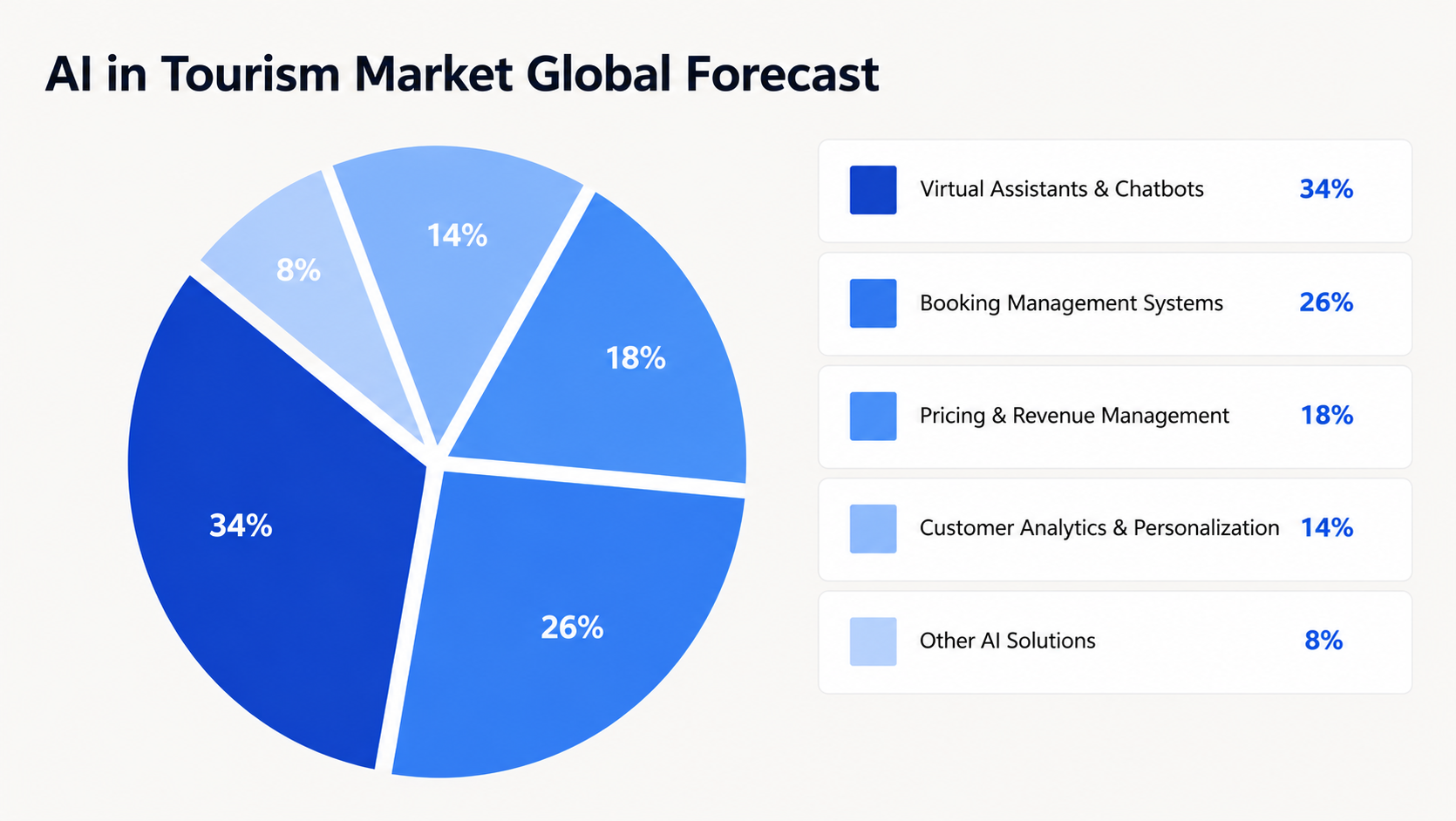
AI in Tourism Industry Growth Forecast
As customer expectations continue to evolve, travel businesses are under increasing pressure to deliver faster responses, personalised recommendations, and seamless digital experiences. According to Deloitte, 44% of travellers using AI for trip planning have already booked restaurants, activities, or experiences based on AI recommendations.
For example, a traveller searching for a family vacation package may browse multiple destinations without finding the right fit. An AI-driven travel assistant can instantly recommend customized itineraries, answer pricing questions, suggest upgrades, and guide the traveller toward checkout in real time reducing friction that would otherwise lead to drop-offs.
Why Travellers Are Dropping Off Before They Book
Waiting Too Long Kills Purchase Intent
Travel decisions are highly time-sensitive. When users cannot get quick answers about pricing, availability, or itinerary options, they leave. An AI travel assistant keeps users engaged during high-intent booking moments through instant, contextual responses.
Generic Suggestions Do Not Convert
Modern travellers expect recommendations based on their preferences, budgets, and travel history. Generic destination lists and static suggestions create friction that quietly reduces conversions.
Complicated Checkout Flows Push Users Away
Long booking forms, unclear confirmation steps, and delayed communication remain some of the biggest reasons bookings are abandoned midway. An AI-powered travel booking assistant simplifies this by guiding users through each step in real time answering questions, surfacing the right options, and reducing drop-off at every stage.
Round-the-Clock Queries Go Unanswered
Travellers browse and book across different time zones. Businesses relying only on limited support hours miss inquiries that could have converted into bookings.
How an AI Travel Agent Works Across Your Booking Journey
A well-built AI travel agent does more than answer questions; it actively moves travellers through your booking funnel.
Responds Instantly at Any Scale
Whether handling ten inquiries or thousands simultaneously, an AI travel assistant provides real-time support without delays or staffing limitations.
Delivers Personalised Travel Experiences
By analysing customer behaviour, preferences, and booking patterns, intelligent travel automation systems recommend relevant destinations, packages, and upgrades far more accurately than static filters ever could.
Improves Booking Conversion Rates
Reducing delays and simplifying communication helps move travellers from initial interest to confirmed booking more efficiently.
Scales Support Without Increasing Headcount
During peak seasons, AI-powered travel support systems help businesses manage growing volumes without proportionally increasing operational costs.
These capabilities become even more effective when combined with custom software development, and intelligent automation systems that fit directly into existing booking workflows instead of operating separately.
How AI Travel Agents Increase Travel Revenue
Beyond improving customer experience, AI travel agents directly impact revenue growth for travel businesses.
They help businesses:
- Reduce abandoned bookings through instant assistance
- Upsell hotels, upgrades, and premium packages
- Cross-sell activities, insurance, and transportation
- Increase repeat bookings with personalised recommendations
- Maximise conversions during peak booking periods
For travel businesses competing in crowded markets, faster and more personalized booking experiences often translate directly into higher revenue.
Traditional Support vs AI Travel Agent
Area | Traditional Support | AI Travel Agent | Result |
Response Time | Delayed | Instant | Faster bookings |
Personalisation | Limited | Real-time recommendations | Higher engagement |
Availability | Business hours only | 24/7 support | Reduced missed inquiries |
Consistency | Variable | Always on-brand | Better customer experience |
Who Gets the Most Value from an AI Travel Agent
Online Travel Agencies
OTAs manage large volumes of daily interactions. An AI travel agent helps improve response speed and booking assistance without compromising personalisation quality.
Hotels and Hospitality Platforms
From reservation inquiries to room upgrades and guest communication, AI chatbot integration and automated travel support systems improve engagement throughout the booking process.
Corporate Travel Management
Corporate travel includes approvals, policy compliance, itinerary changes, and expense management. Automated travel systems simplify these tasks and reduce manual work for travel managers.
Tour and Experience Providers
Personalised package recommendations and instant customer assistance help smaller travel businesses compete more effectively with larger platforms.
5 Warning Signs Your Travel Website Needs an AI Travel Agent
If any of these sound familiar, your booking funnel has a problem that a custom AI travel agent can directly solve:
- Bookings are frequently abandoned before payment
- Response delays are affecting conversions
- Customer support teams are overwhelmed during peak seasons
- Recommendations feel outdated or generic
- Scaling customer support is becoming too expensive
Businesses facing these challenges often benefit from custom software services and AI-powered workflow automation designed specifically for travel platforms.
Conclusion
Customer expectations in the travel industry have shifted significantly. Travellers now expect instant responses, relevant recommendations, and seamless booking experiences across every interaction.
Businesses still relying entirely on traditional booking workflows risk losing customers to competitors already using AI-driven travel automation solutions.
The difference between a travel website that converts and one that doesn’t often comes down to one thing: how well it responds when a traveller is ready to book. Hiteshi helps travel businesses build AI travel agents, intelligent booking systems, custom software solutions, and scalable travel platforms designed around their specific workflow and customer journey. The result is not just a smarter website it is a booking experience travellers actually complete.
Source: MarketsandMarkets
FAQs
How does an AI travel agent reduce booking drop-offs?
AI travel agents reduce delays, personalise interactions, and guide users throughout the booking process, helping businesses remove common friction points that lead to abandoned bookings.
Can AI travel agents integrate with existing travel platforms?
Yes. AI travel agents integrate with booking engines, payment gateways, and travel management platforms without requiring a complete infrastructure overhaul.
Are AI travel agents suitable for smaller travel businesses?
Yes. Businesses can begin with focused use cases such as booking assistance or 24/7 customer support and expand over time.
What makes a custom AI travel agent better than a generic chatbot?
Unlike off-the-shelf chatbots built for general use, a custom AI travel agent is designed around how your business actually operates your booking flow, your customer journey, and your specific service offering. That alignment is what makes it effective
How long does it take to implement an AI travel agent?
Implementation timelines depend on project scope, integrations, and complexity. Working with an experienced AI and custom software development partner like Hiteshi helps speed up deployment while minimising disruption to existing operations.