
Dating App Development: A Complete Guide to Cost, Features, and Technology

Dating App Development today is not just about matching profiles it involves building trust, ensuring performance at scale, and delivering personalization that keeps users engaged over time. The dating app market continues to grow, but so does competition. User expectations are shaped by polished experiences from platforms like Tinder, Bumble, and Hinge, while concerns around privacy, safety, and authenticity are higher than ever.
For founders, startups, and businesses exploring this space, the real challenge lies in balancing features, technology, cost, and long-term scalability. This guide breaks down what it actually takes to build a successful dating app, from core features and tech choices to realistic development costs and execution risks.
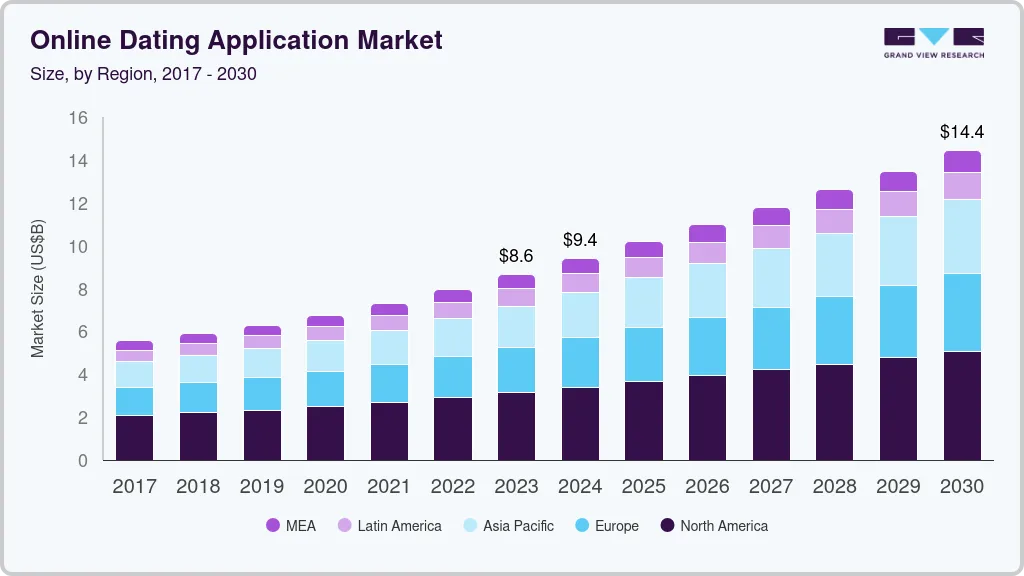
Source: grandviewresearch
The rapid growth of the online dating market highlights why investing in scalable and future-ready dating app development has become a strategic priority for startups and businesses worldwide, with strong expansion projected across all major regions through 2030.
Understanding the Business Model Behind Dating Apps
Before development begins, it is critical to define how the app will generate revenue and retain users.
Common monetization models include:
- Subscription plans for premium features
- In-app purchases such as boosts and super likes
- Advertisements for free-tier users
- Hybrid freemium models
Each model influences feature prioritization, backend architecture, and even UI decisions. A mismatch between business goals and product design often leads to poor retention, even with high initial downloads.
Core Features Required in Dating App Development
User Onboarding and Profile Creation
A seamless onboarding experience reduces drop-offs. Modern dating apps rely on:
- Phone or social login
- Profile verification mechanisms
- Preference and interest tagging
- Image and bio moderation
This stage sets the foundation for trust and match quality.
Matchmaking and Discovery Logic
At the heart of dating app development is the matching algorithm. While early-stage apps may start with basic filters, scalable platforms use:
- Behavioral data
- Location-based matching
- Interest and activity scoring
- Machine learning–assisted recommendations
The goal is not just matching, but improving match relevance over time.
Real-Time Chat and Communication
Messaging keeps users engaged. Essential capabilities include:
- One-to-one chat
- Media sharing
- Read receipts and typing indicators
- Push notifications
At scale, chat infrastructure must handle high concurrency without latency.
Safety, Privacy, and Moderation
Trust is a growth driver. Dating apps must include:
- Profile reporting and blocking
- AI-assisted content moderation
- Data encryption
- GDPR and regional compliance controls
Neglecting safety directly impacts retention and brand credibility.
Advanced Features That Differentiate Modern Dating Apps
As competition increases, differentiation becomes critical. Many platforms now integrate:
- AI-based profile recommendations
- Video profiles and live interactions
- Personality or compatibility quizzes
- Location-based events or social discovery
These features increase engagement but also add development and infrastructure complexity.
Technology Stack for Dating App Development
Frontend Technologies
- Flutter or React Native for cross-platform apps
- Swift (iOS) and Kotlin (Android) for native performance
Backend and Infrastructure
- Node.js or Django for scalable APIs
- Cloud platforms such as AWS or Google Cloud
- Real-time databases for chat functionality
AI and Data Layer
- Recommendation engines
- Fraud and fake profile detection
- Analytics for user behavior tracking
Technology choices should align with expected user growth and future feature expansion.
Dating App Development Cost Breakdown
The cost of building a dating app varies widely based on scope, quality, and region.
App Complexity | Estimated Cost |
Basic MVP | $20,000 – $40,000 |
Mid-Scale App | $50,000 – $90,000 |
Advanced Platform | $100,000+ |
Key Cost Drivers
- Custom UI/UX design
- Matching algorithm complexity
- Real-time messaging infrastructure
- Security and compliance requirements
- Ongoing maintenance and updates
Underestimating post-launch costs is one of the most common mistakes founders make.
Custom Development vs Ready-Made Dating App Solutions
Factor | Ready-Made Solution | Custom Development |
Time to Market | Faster | Moderate |
Customization | Limited | High |
Scalability | Restricted | Flexible |
Long-Term ROI | Lower | Higher |
Brand Differentiation | Minimal | Strong |
Custom dating app development is typically the better option for businesses targeting long-term growth and differentiation.
Scalability and Long-Term Growth Considerations
A dating app’s success often creates its own challenges. Rapid user growth can strain:
- Servers and databases
- Matching performance
- Moderation workflows
- Customer support systems
Designing for scalability from day one avoids costly reengineering later and supports smoother feature expansion.
Common Challenges and How to Mitigate Them
- Low retention: Improve onboarding and match quality
- Fake profiles: Use verification and AI moderation
- High churn: Introduce meaningful engagement features
- Performance issues: Invest in scalable backend architecture
Each issue is manageable when addressed during planning rather than after launch.
Common Challenges and How to Mitigate Them
Dating app development is as much a business and trust challenge as it is a technical one. Success depends on thoughtful feature selection, a scalable technology stack, realistic budgeting, and a deep understanding of user behavior. Apps that focus only on launch speed often struggle to retain users or scale profitably.
For businesses looking to build a reliable and future-ready platform, working with an experienced Dating App Development Company makes a measurable difference. Hiteshi Infotech specializes in custom dating app development, helping startups and enterprises translate product ideas into secure, scalable, and engaging dating platforms built for long-term growth.
Have a specific requirement or idea in mind? Get in touch with our experts to discuss how we can build the right solution for your business.
FAQs
Typically 3–6 months depending on complexity and feature scope.
A basic MVP can start from $20,000, excluding marketing and maintenance.
Flutter or React Native for frontend, with a scalable cloud backend.
Security must be intentionally designed with encryption, moderation, and compliance controls.
Yes, if the backend and infrastructure are designed for growth from the start.