
Music streaming platforms have changed how the world listens to music, and the next few years look even bigger than the last few.
At Hiteshi, we’ve worked closely in this space, and the platforms pulling ahead right now are solving two specific problems most competitors still ignore: helping listeners actually find music they love, and helping artists earn money they can count on.
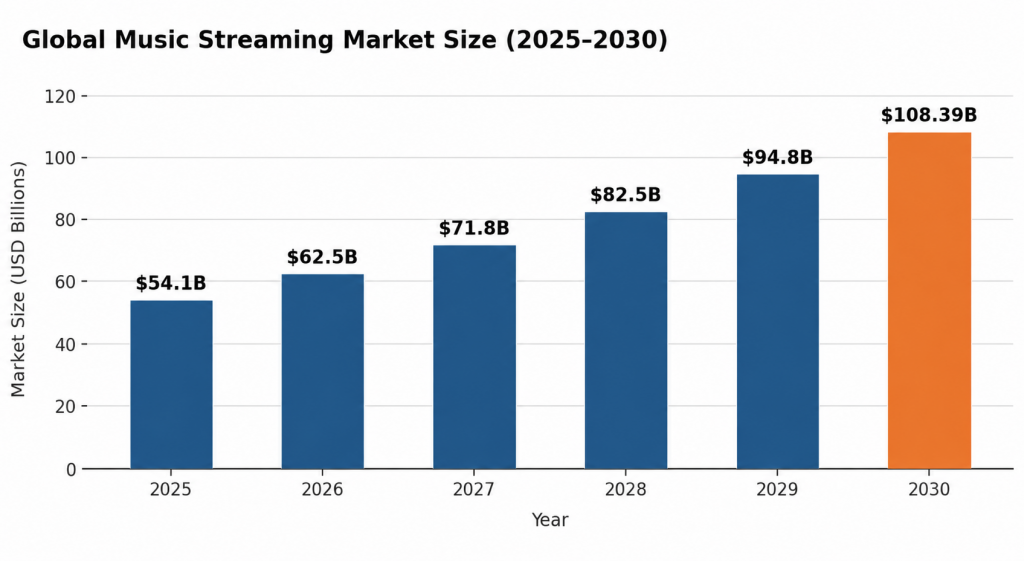
The global music streaming market is projected to grow from $54.1 billion in 2025 to $108.39 billion by 2030 according to Grand View Research. That’s not slow, steady growth. That’s the market nearly doubling in five years. It goes to AI-powered music platforms that get personalization and artist payments right.
The Real Problems Music Streaming Platforms Are Facing
A growing market doesn’t mean every platform wins equally. The ones capturing the most growth are the ones fixing real problems instead of just adding more content.
Content Discovery Gap
Listeners struggle to find music they’ll actually enjoy in an increasingly crowded marketplace, making intelligent discovery essential for long-term engagement.
Limited Personalization
Many platforms still rely on broad genre classifications instead of leveraging predictive analytics and user preference modelling to create more tailored listening experiences.
Artist-Listener Disconnect
Artists often lack meaningful ways to build stronger relationships with listeners, reducing opportunities for loyalty and long-term monetization.
Scalability Challenges
As user bases grow, platforms need scalable architectures and real-time processing capabilities to maintain performance without compromising the user experience.
These problems directly affect how long people stick around, and whether artists see a platform as worth their time. Solve them, and you don’t just keep users. You position yourself to capture a real share of that $108 billion market instead of watching competitors take it.
Why Personalization Is Critical for Music Streaming Platforms
Generic recommendations don’t work anymore. People expect a platform to understand their taste.
The strongest recommendation engines don’t just look at genre tags or what’s trending. They rely on intelligent audio analysis to study the actual sound of a track, the rhythm, the tone, the structure, paired with machine learning algorithms that match it to a listener’s real behaviour over time. Platforms that get this right see listeners spend more time discovering music they genuinely enjoy.
How Music Streaming Platforms Are Transforming Artist Monetization
Listeners are only half the process. Artists need a real reason to stay on a platform too, and that almost always comes down to money.
The platforms getting this right are moving past simple ad-revenue or subscription splits. They’re building systems where artists earn through multiple channels: listening activity, direct fan contributions, and subscriptions, all calculated and distributed automatically.
When artists collaborate, automatic payment-sharing makes sure everyone gets their fair portion without manual calculations or disputes, with full transparency into how every payment is calculated.
Why Music Analytics Are Becoming Essential for Artists
Getting paid fairly matters, but it’s only part of what keeps artists invested in a platform. Artists also want to understand their audience.
Turning Insight Into Action
Good data only matters if artists can actually use it. The best platforms turn listening patterns into clear insights, helping artists understand the best time to release new music, which cities show the strongest demand, and which songs are connecting most with listeners. AI-based insights and audience analytics make these decisions easier and more effective.
Data Turns Platforms Into Growth Partners
This kind of insight turns a platform from a payment tool into something closer to a business partner, helping artists make smarter decisions about their next release, their next tour, or where to focus their energy.
Audience Insights Drive Better Decisions
A platform that shows artists clear, easy-to-read data, who’s listening, where engagement is strongest, which tracks are gaining traction, gives them the ability to grow. Much of this comes down to AI-driven predictive analysis, which helps artists see not just what’s happened, but what’s likely to happen next with their audience.
How Music Streaming Platforms Are Strengthening Artist-Fan Relationships
Fans don’t just want to listen anymore. Many want to directly support the artists they care about.
Direct Fan Support Creates Superfans
Platforms that let fans contribute money directly to artists, on top of regular listening, are seeing those fans turn into what the industry calls “superfans.” These are listeners who go beyond casual streaming and actively invest in an artist’s success. For artists, this creates steady income and real insight into who their most loyal fans actually are.
Building Stronger Artist-Fan Connections
Fans want more than just a way to support artists financially. They want to feel connected to the music and the people behind it. Platforms that foster this connection build stronger loyalty and deeper engagement that lasts far beyond a single contribution.
Why Trust Matters in Music Streaming Platforms
One detail that’s easy to overlook is speed matters. When a fan contributes money or a song gets streamed, both the artist and the listener should see that reflected immediately, not hours later.
Platforms built on a shared, real-time backend can show instant updates for earnings, listening counts, and contributions. Artists who can see their income and engagement update in real time trust the platform more, and that trust translates directly into retention.
How Music Streaming Platforms Are Evolving Beyond Streaming
Music platforms today serve more than just solo artists. Bands, record labels, and managers all need to use the same system, often for different reasons.
Supporting Multiple Stakeholders Through One Platform
What They Need | How a Strong Platform Delivers |
Solo Artists | An all-in-one environment for managing earnings, understanding audiences, and building stronger fan relationships. |
Bands | Automated payment distribution and collaborative tools that simplify revenue management. |
Record Labels | A centralized dashboard for monitoring artist performance, revenue streams, and audience engagement. |
Managers | Data-driven insights that help optimize growth strategies and maximize artist success. |
A unified platform makes it easier for all these users to work together while allowing the platform to scale more efficiently as more artists and listeners join.
What's Next for Music Streaming Platforms
AI-driven predictive analysis and recommendation engines are getting better at knowing what a listener wants before they even search for it. Intelligent audio analysis is also moving past simple genre or mood labels, now picking up on what actually makes a song work, and why one listener responds to it differently than another.
As machine learning algorithms keep improving, platforms have a real opportunity to make every listener feel like the platform was built just for them.
Conclusion
Listeners now expect digital music platforms to know their taste instantly, and artists expect to be paid fairly and understood, not just streamed and forgotten. Platforms still relying on basic recommendations and simple payout models risk losing both groups to competitors offering something smarter.
This is why the platforms shaping the next phase of music streaming are investing in AI-powered solutions built around real listening data, transparent artist payments, and audience insight.
Hiteshi helps businesses build music streaming platforms tailored to how listeners actually behave and how artists actually grow. The result is a platform that earns loyalty on both sides, not just downloads.
Source: Grand View Research
FAQs
How do collaborative playlists improve the music experience?
Collaborative playlists allow multiple users to add and manage songs together, making music more social and helping listeners discover new artists through friends and communities.
How can music streaming platforms help independent artists earn more?
Modern music streaming platforms help artists earn beyond traditional royalties through fan contributions, subscriptions, and direct engagement. These additional revenue streams help artists build more sustainable careers.
What challenges do music streaming platforms face?
Some of the biggest challenges music streaming platforms face are content discovery, user retention, artist monetization, and maintaining performance as audiences grow.
How are music streaming platforms improving music discovery?
Music streaming platforms are improving music discovery through AI-driven recommendations and personalized experiences that help listeners find songs and artists that match their tastes.
Why are businesses investing in music streaming platforms?
Businesses are investing in music streaming platforms because growing demand for digital entertainment is creating opportunities for recurring revenue, stronger user engagement, and innovative ways to support artists.