
Top Healthcare IT Solutions Every Modern Hospital Needs
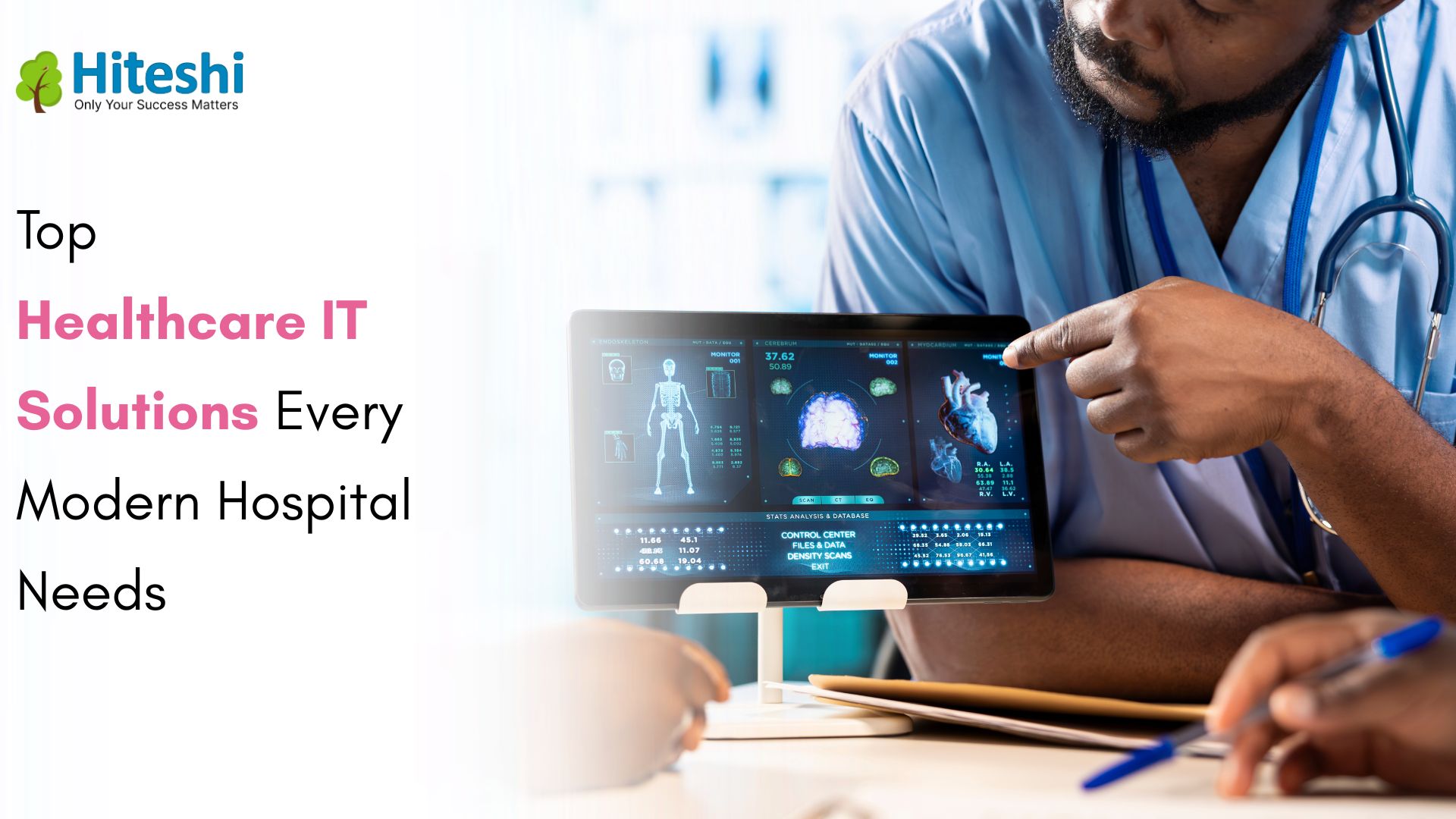
The healthcare industry is undergoing a massive digital transformation, driven by the adoption of top healthcare IT solutions that redefine how modern hospitals operate. Modern hospitals are no longer defined only by advanced medical equipment but also by intelligent, data-driven IT solutions. From improving patient outcomes to streamlining operations, technology plays a critical role in delivering high-quality care.
At the heart of this transformation is AI in healthcare, powering smart systems such as AI medical diagnosis tools and predictive analytics platforms. Let’s explore the top healthcare IT solutions every modern hospital needs to stay competitive, efficient, and patient-centric.
1. AI in Healthcare: Transforming Patient Care
AI in healthcare is revolutionizing how hospitals diagnose, treat, and manage patients. By analyzing vast amounts of medical data, AI-driven systems help clinicians make faster, more accurate decisions.
Key benefits:
- Faster and more accurate diagnoses
- Reduced human error
- Personalized treatment plans
- Improved patient outcomes
AI-powered tools can analyze medical images, lab results, and patient histories, enabling doctors to focus more on patient care and less on administrative tasks.
2. AI Medical Diagnosis Systems
AI medical diagnosis solutions are becoming indispensable in modern hospitals. These systems use machine learning and deep learning algorithms to detect diseases at early stages.
Common use cases:
- Radiology imaging (X-rays, MRIs, CT scans)
- Pathology slide analysis
- Detection of cancer, cardiovascular diseases, and neurological disorders
By leveraging AI in healthcare, hospitals can significantly reduce diagnostic turnaround time while improving accuracy and consistency.
3. Predictive Analytics for Proactive Healthcare
Predictive analytics is one of the most powerful healthcare IT solutions today. It uses historical and real-time data to forecast future health outcomes.
How predictive analytics helps hospitals:
- Identifies high-risk patients early
- Predicts disease outbreaks
- Reduces hospital readmissions
- Optimizes staffing and resource allocation
When combined with AI in healthcare, predictive analytics enables proactive care instead of reactive treatment.
4. Electronic Health Records (EHR) with AI Integration
Modern EHR systems go beyond data storage. AI-enhanced EHRs provide actionable insights by analyzing patient data in real time.
Advantages:
- Automated clinical documentation
- Intelligent alerts for drug interactions
- Data-driven treatment recommendations
Integrating AI in healthcare with EHR systems improves clinical efficiency and ensures better continuity of care.
5. Remote Patient Monitoring and Telehealth Platforms
Remote patient monitoring (RPM) and telehealth solutions have become essential for modern hospitals, especially after the rise of virtual care.
Features include:
- Wearable device integration
- Real-time health tracking
- AI-powered alerts for critical conditions
AI-driven telehealth platforms allow hospitals to deliver continuous care while reducing costs and improving patient satisfaction.
6. Hospital Operations and Workflow Automation
AI-powered healthcare IT solutions also optimize hospital operations. From appointment scheduling to supply chain management, automation improves efficiency.
Operational benefits:
- Reduced administrative workload
- Optimized bed management
- Efficient inventory control
By applying AI in healthcare to operational workflows, hospitals can reduce costs and improve service delivery.
7. Data Security and Compliance Solutions
With the increasing use of digital systems, data security is a top priority. AI-driven cybersecurity solutions help hospitals protect sensitive patient information.
Key capabilities:
- Threat detection and prevention
- Compliance with healthcare regulations
- Real-time monitoring and alerts
Secure IT infrastructure ensures trust, compliance, and uninterrupted healthcare services.
Conclusion
Modern hospitals must adopt advanced healthcare IT solutions to meet the growing demands of patients and healthcare providers. From AI in healthcare and AI medical diagnosis to predictive analytics and smart EHR systems, these technologies are redefining the future of healthcare.
By building intelligent, AI-powered healthcare systems, hospitals can deliver better patient outcomes, improve operational efficiency, and stay ahead in an increasingly competitive healthcare landscape.
AI-based diagnostics refers to the use of artificial intelligence technologies to analyze medical data and imaging, enabling faster and more accurate detection of diseases and conditions.
They reduce diagnostic errors, accelerate decision-making, increase efficiency in clinical workflows, and support providers with data-driven insights for better patient care.
Yes, when properly trained on quality data and validated in clinical settings, AI diagnostic systems can meet rigorous safety and reliability standards while complementing clinician expertise.
AI diagnostic tools are designed to integrate with electronic health records (EHRs) and other healthcare IT systems, enhancing data accessibility and operational continuity.
No, they augment clinical expertise by providing supportive insights and efficiency gains, but final diagnosis and treatment decisions remain the responsibility of qualified healthcare professionals.